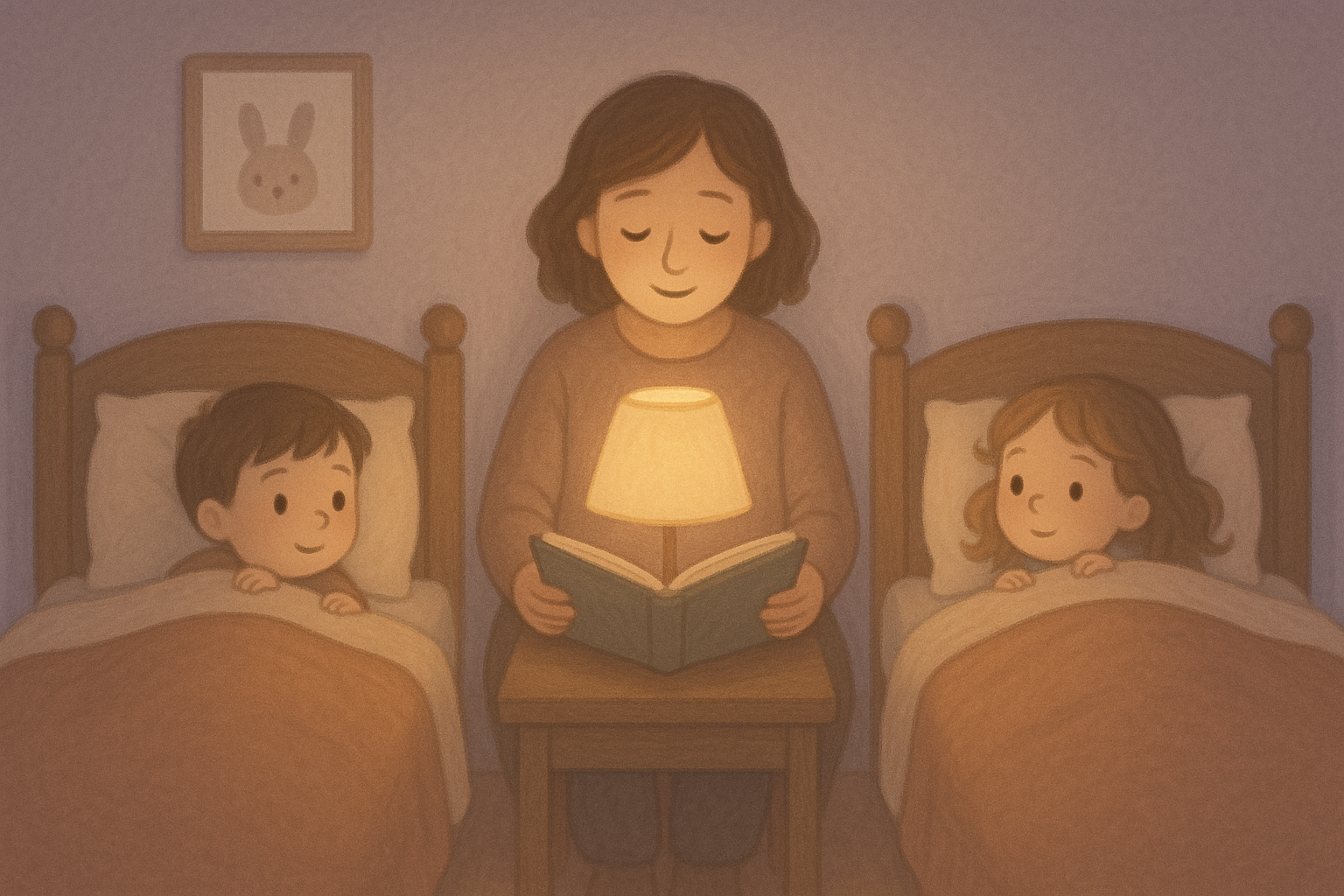
When Two Kids Share a Room: Bedtime Story Strategies That Keep the Peace
Two kids, one room, and a bedtime story can turn into a small United Nations summit. When siblings share a room, bedtime story strategies that keep the peace are less about fairness math and more about clear turns, shared plots, and ending before anyone starts a second debate.
Short answer: use a shared "crew" story when possible, rotate hero nights, keep stories short enough to finish, and separate lights-out from the storytelling slot if ages differ. Predictable rules beat nightly renegotiation.
Why shared rooms make story time spicy
Different sleep needs. Different fear levels. Different opinions about whether the fox should talk. Add a top bunk and you've got acoustics. The goal isn't identical satisfaction every night. It's a repeatable plan that reduces surprise conflict.
Strategy 1: One story, two heroes
Write both kids into the same adventure. They share a quest, take turns being brave, and return to the same bedroom in the final line. Crew stories reduce "why is it always about them?"
Personalized bedtime stories are excellent for this—both names, both stuffed animals, one soft ending.
Strategy 2: Hero nights on a visible calendar
Monday/Wednesday/Friday: Kid A leads. Other nights: Kid B. Put it on a sticky note on the door. Visual fairness calms lawyers-in-training.
Strategy 3: Shared story + micro add-on
Read one short shared tale, then sixty seconds of personal whisper for the kid who needs an extra landing. Keep the add-on truly micro so it doesn't restart negotiations.
Strategy 4: Stagger the routine, sync the story
Older kid does teeth first and reads quietly on their bed while you finish the younger one's pajamas. Then both listen to the same three-minute story. Story becomes the reunion moment.
Strategy 5: The "two doors" ending
Same story, then individualized lights-out phrases. Kid A gets "You're safe. Quiet body." Kid B gets their preferred line. Shared middle, custom goodbye.
Strategy 6: Audience jobs
One child turns pages. One holds the flashlight / lamp string. Jobs reduce sibling commentary because everybody's busy being useful.
House rules that prevent 9 p.m. court
- Story picks come from a two-option menu
- No veto after the story starts
- If someone sabotages (loud interruptions on purpose), story pauses once—then continues with a boring warning, not a long lecture
- Lights-out time is not renegotiated via tears about plot
When ages are far apart
A toddler and an eight-year-old may not thrive on identical pacing. Options:
- Short shared ritual, then older kid's audiobook with headphones after lights soften
- Earlier story for the younger; older joins as "helper narrator" for the last page
- Weekend long-chapter time for the older kid in another space
Protect the younger's sleep window. Older kids can survive a shorter shared tale if they get dignity elsewhere.
Fear and giggling contagion
One scared kid can recruit the other. Keep plots gentle. Sidekicks stay loyal. Closets get checked once as part of routine, not as an open-ended investigation.
One giggly kid can recruit the other too. Lower your voice. Dim further. Switch to the calmest story in the stack. Matching their energy rarely shortens the night.
Soft CTA
If inventing dual-hero plots drains you, let a personalized story carry both names. SlumberTales can help you read one calm adventure that treats the shared room like a crew quarters—not a battleground.
Repair nights after a blowup
Some evenings will implode. When they do, skip the TED Talk in the hallway. Wait until morning for a two-minute reset: "Last night got loud. Tonight we use hero chart and short story. You're both on the same team."
Restore the visual schedule if it got torn down (literally or emotionally). Offer a crew story for a few nights so neither child feels scarce. Then return to rotation.
If one child consistently sabotages to delay sleep, handle that as a sleep-boundary issue—not only a story-choice issue. Boring consistency beats clever new consequences invented at 8:50.
Shared-room peace is a long game. The families who get through it usually aren't the ones with perfect fairness algorithms—they're the ones with fewer nightly surprises.
FAQ
Q: Should shared-room siblings always have the same bedtime? A: Close ages often can. Bigger gaps may need staggered lights-out with a shared early story.
Q: What if one child always cries when they're not the hero? A: Use crew stories for a week, then reintroduce hero nights with a visible schedule and a consolation job (page turner, lamp helper).
Q: How long should a shared-room story be? A: Shorter than you think—often 3–6 minutes. Finishability keeps peace.
Q: Can they each have a different stuffed companion in one story? A: Yes. Dual sidekicks work if each has one clear job.
Q: What about night wakings when one wakes the other? A: Keep responses boring and brief. White noise can help. Address schedule and fear themes separately from story politics.
Q: Is it okay to skip stories some nights in a shared room? A: Yes. Keep two anchors (same phrase, same order of pajamas/teeth). Story is powerful, not mandatory every single night.
Q: How do we choose books without a fight? A: Parent offers two. Kids can alternate who picks from the pair. No open shelf voting at 8:15.
Q: Do personalized stories reduce sibling rivalry at bedtime? A: They can when both children appear as valued helpers. Recognition lowers the scarcity feeling.