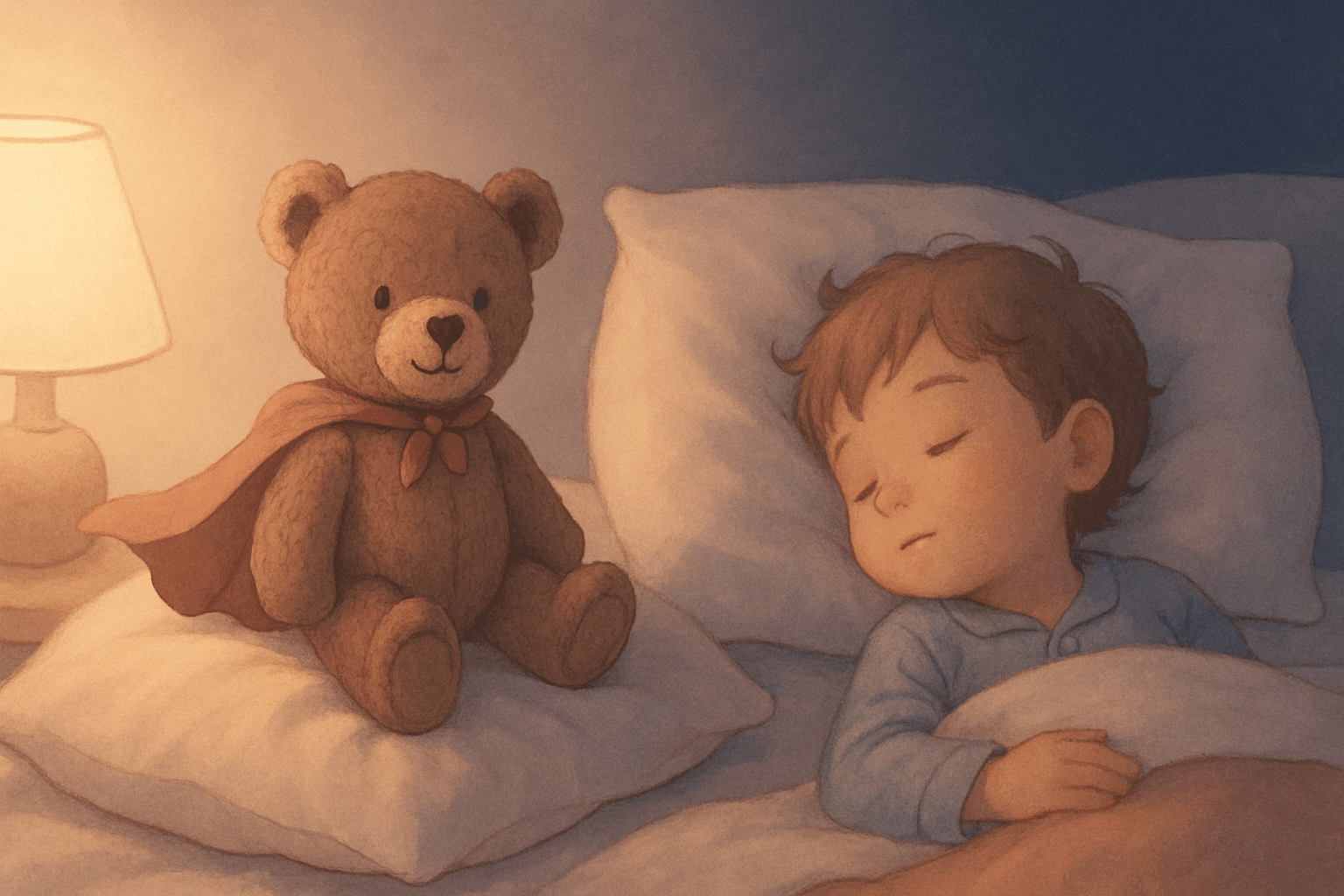
How to Turn a Stuffed Animal Into a Bedtime Companion Kids Trust
Somewhere in your house there's a bear with matted fur, a missing eye, and absolute executive authority at 8 p.m. Kids don't trust that toy because it's trendy. They trust it because it has been there—through fevers, moves, and the night the thunder wouldn't quit.
Short answer: turn a stuffed animal into a trusted bedtime companion by choosing one "job," giving it a simple personality, including it in the wind-down ritual, letting it "help" with worries, and keeping its role consistent. The toy becomes a bridge object—something kids use to feel safe when parents step out of the room.
Why stuffed animals work when lectures don't
You can say "you're safe" seventeen times. A worn rabbit that has sat through every bedtime says it without words. Child development folks often talk about transitional objects: items that carry a bit of home and a bit of independence at once.
That's the job. Not decoration. Not a pile of twelve nearly identical unicorns fighting for pillow space (we've all been there).
Start with one companion, not a committee
Pick the toy your child already reaches for. If they don't have a favorite yet, let them choose—then stop expanding the roster every birthday. One primary companion is easier to build a story around.
Give the toy a tiny biography out loud: "This is Pip. Pip is brave about the dark and terrible at sharing crackers." Keep it light. Kids will add lore. Your job is to not contradict the core: Pip is on their side.
Give the toy a bedtime job
Jobs make trust concrete:
- Door checker (you still do the real check; the toy "supervises")
- Worry holder ("tell Pip first, then if you still need me, call")
- Breathing buddy (squeeze on the in-breath)
- Story listener who always hears the ending
When the stuffed animal has a role, kids borrow its calm. You're not replacing yourself. You're adding a deputy.
Put the companion inside the story, not only on the pillow
This is where bedtime stories earn their keep. A tale where the child's fox helps find a lost moonbeam stitches the toy into imagination and routine at the same time. Personalized bedtime stories are especially good at this—your kid's actual toy gets a speaking part, which makes the plush feel more "real" in the helpful sense, not the creepy sense.
Parents who use SlumberTales often drop the toy's name into the story request so the companion shows up as a helper, not a prop.
Keep the ritual boring on purpose
Same shelf. Same "goodnight, Pip" line. Same place on the pillow. Novelty is for daytime. At night, the companion should be the most predictable creature in the room.
If the toy gets lost, don't panic-buy a duplicate in secret unless you must—many kids notice. Involve them in a calm search plan. The relationship is part of the comfort.
What to avoid
- Using the toy as a threat ("If you don't listen, Pip leaves")—that breaks trust fast
- Over-animating until you are exhausted performing a puppet show
- Forcing a companion on a kid who isn't interested; some children prefer blankets or a parent shirt
A two-minute bedtime script
"Pip's on worry duty tonight. Tell Pip the loud thought. I'll listen for thirty seconds after. Then lights out, and Pip stays right here."
Short. Kind. Repeatable. That's the whole trick.
Quotable definition
A bedtime companion is a trusted stuffed animal or comfort object that helps a child feel safe during the handoff from parent presence to sleep.
When the companion joins daytime too
Some kids want Pip at breakfast, school drop-off, and the grocery store. That's common after a scary stretch or a big transition. You can set gentle boundaries—"Pip waits in the backpack during class"—without mocking the attachment. Bedtime is where the companion's job matters most; daytime rules can be kinder and clearer when the nighttime role stays sacred.
FAQ
Q: What age do stuffed animals help most at bedtime? A: Many kids lean on them from toddler years through early elementary. Some older kids still want them—there's no shame deadline.
Q: Can more than one stuffed animal be the bedtime companion? A: A small crew is fine, but name one primary helper so the ritual stays clear.
Q: What if my child wants the toy to sleep in my bed instead? A: Keep the companion in their sleep space when you can. The point is supporting their room, not migrating the whole comfort system to yours.
Q: How do I wash a beloved stuffed animal without drama? A: Prep them: "Pip gets a spa day." Offer a temporary deputy if needed. Match the clean scent as best you can afterward.
Q: Should the stuffed animal talk in my voice every night? A: Occasional voices are fun; constant performance can tire you out. A simple goodnight line is enough most evenings.
Q: Can stories make a toy scarier by accident? A: Yes—avoid plots where the toy disappears, turns mean, or can't protect. Keep companions loyal and present.
Q: What if we forgot the toy on a trip? A: Acknowledge the miss, pick a temporary stand-in, and keep the same words in the ritual. Replace the original as soon as you can.
Q: Are personalized stories necessary to build toy trust? A: No, but they help. Hearing the toy named as a helper reinforces the bond you're already building with hugs and habits.