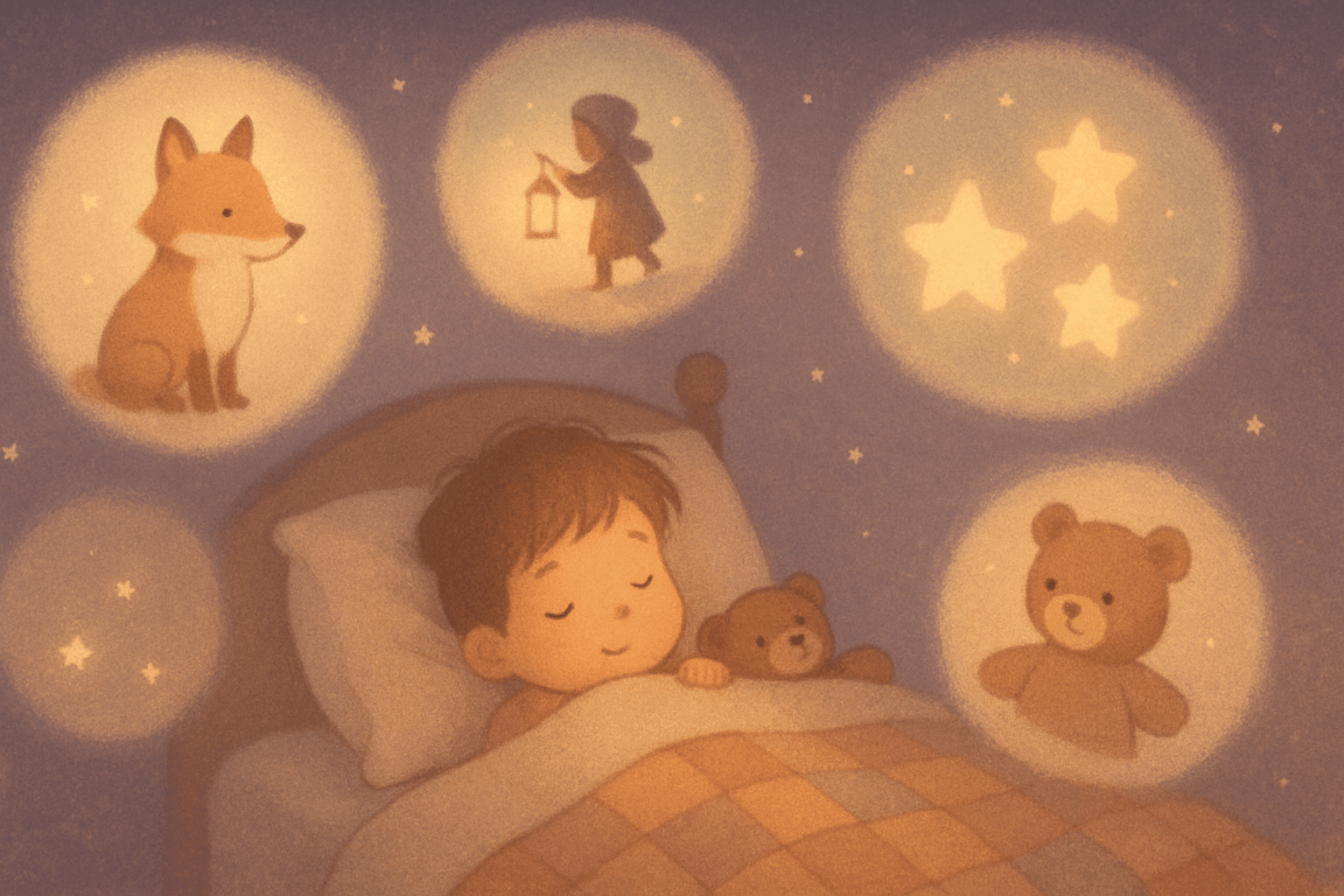
11 Story Themes Kids Ask For Again and Again at Lights-Out
Ask any parent what their kid wants "just one more time," and you'll hear the same themes on loop: animals that talk, brave kids who aren't quite ready, tiny adventures that still end in bed.
Short answer: kids ask again and again for story themes that feel safe, slightly exciting, and personally theirs—animal friends, gentle quests, teamwork, magic-with-rules, everyday courage, silliness, nature, family, space-lite, and "me as the hero." Those themes work because they give kids predictability with a little sparkle.
Why the same themes keep winning at lights-out
Bedtime isn't when kids want a thriller. They want a world that bends toward comfort. Themes that land at night usually do three things: name a feeling kids already have, offer a small problem, and close with belonging.
That last piece matters. A story that strands a character alone in the dark may be fine at 3 p.m. At 8:30 p.m., many kids need the opposite.
1. Talking animal friends
Dogs who give pep talks. Cats who notice when someone's scared. Bears who share snack rules. Animals let kids practice feelings at a safe distance—"the fox was nervous" is easier than "I was nervous."
2. Tiny quests with a soft landing
Find the missing mitten. Deliver a letter to the moon mailbox. Help a snail cross a puddle. The quest should be finishable in one sitting, and the ending should bring everyone home.
3. Teamwork and sibling-ish helpers
Kids love crews. Even an only child often wants a sidekick. Themes about helping a friend, sharing a plan, or taking turns scratch a social itch without playground drama.
4. Magic with clear rules
Wishes that cost a kindness. Capes that only work when you tell the truth. Magic without boundaries can feel sticky at night; magic with gentle rules feels cozy.
5. Everyday courage
First day nerves. Trying the big slide. Saying sorry. These stories don't need dragons. They need a kid who feels small and still takes one brave step—then sleeps.
6. Silly, low-stakes humor
A pancake that keeps escaping. Socks that argue. Bathroom jokes, if that's your house's love language (you know who you are). Light silliness lowers the room's temperature.
7. Nature and weather as characters
Rain that drums a lullaby. A patient tree. Fireflies that wait. Nature themes slow the pace without lecturing about calm.
8. Family rituals and "we're a team"
Stories about Friday pizza, grandma's call, or dad's silly goodnight handshake reinforce belonging. Kids ask for these when life feels busy.
9. Gentle space and sky themes
Stars as friends. A moon that checks on sleepy towns. Keep it wonder-forward, not sci-fi chase. Night-sky stories pair oddly well with actual bedtime darkness.
10. Favorite toys coming alive (carefully)
Stuffed animals that whisper encouragement are gold—especially if the toy already sits on the pillow. Keep the toy protective, not spooky.
11. "Me as the hero" personalization
This is the theme kids beg for once they've tasted it. Hearing their name, their pet, their street, their stuffed fox turn the story from entertainment into recognition. Personalized bedtime stories lean hard into this, which is why kids request them on repeat.
You don't need a publishing house for that. Parents using SlumberTales often start with one familiar theme—animals, courage, a tiny quest—and let the child's details carry the rest.
How to rotate themes without starting fights
- Keep a short "story menu" of 5–7 themes your child already likes
- Let them pick from two options, not the whole universe
- Reuse settings; change one detail (new helper, new small problem)
- End the same way most nights so the brain knows sleep is next
Quotable line
Story themes kids ask for at bedtime are usually safe adventures with familiar feelings, soft endings, and a sense that the child (or their stand-in) belongs.
A quick way to invent tonight's plot
Take any theme above and fill: helper + small problem + kindness + home. Example: talking cat + missing mitten + share umbrella + back under the quilt. You just made a bedtime story in under a minute. Personal details—name, street, toy—turn that skeleton into something your child claims as theirs.
FAQ
Q: Why does my child only want animal stories? A: Animals are emotionally safe stand-ins. Stay with the theme and vary the plot—lost hat, rainy picnic, new friend—so repetition still feels fresh.
Q: Are scary themes okay at bedtime? A: Mild tension can work if it's resolved quickly and the helper never abandons the child character. Save bigger scares for daytime reading.
Q: How do I invent themes when I'm exhausted? A: Steal structures, not sentences. "Child + helper + small problem + home" covers most nights. Personal details do the heavy lifting.
Q: Can personalized bedtime stories replace picture books? A: They can share the slot. Picture books build literacy and shared culture; personalized stories boost attention and emotional fit. Many families alternate.
Q: What if siblings want different themes? A: Alternate nights, or tell one story with two heroes who share the quest. Crews solve a lot of sibling politics.
Q: Is repetition of the same theme unhealthy? A: Usually no. Repetition is how kids rehearse safety. Offer gentle variety inside the theme before forcing a full switch.
Q: Which themes help anxious kids most? A: Everyday courage, protective animal friends, and "toy comes alive as a helper" tend to land well—especially with soft endings.
Q: How long should a bedtime story be? A: Long enough to settle, short enough to finish. For many kids ages 2–8, that's roughly 3–8 minutes of reading aloud.