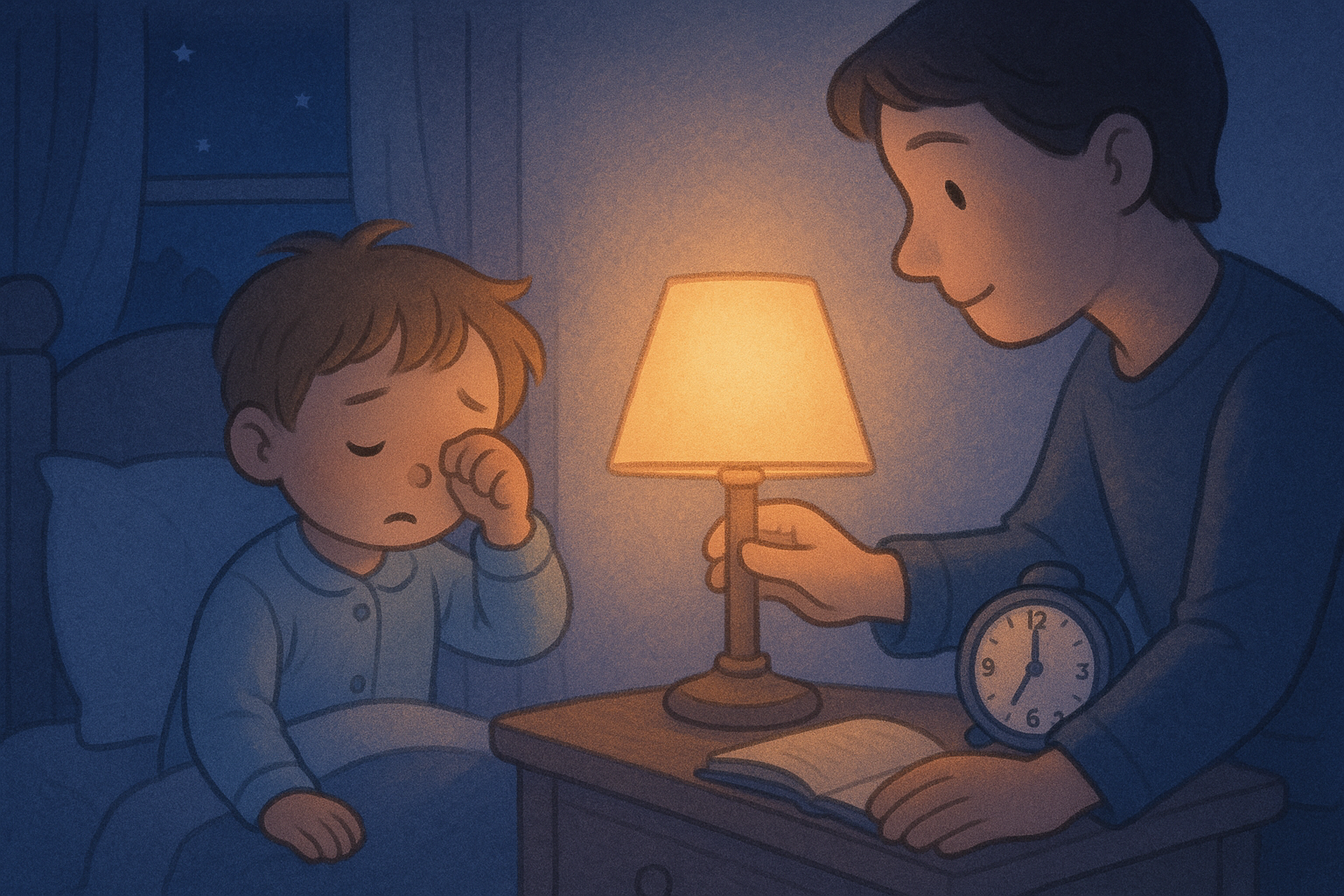
8 Signs Your Child's Bedtime Is Too Late (And How to Shift It Gently)
If evenings feel like a slow-motion car crash—wired giggles, then tears, then a second wind at 9:15—your child's bedtime may simply be too late.
Short answer: common signs bedtime is too late include a "second wind," long wind-downs, morning misery, falling asleep in the car or on the couch, big bedtime battles, hyper silliness, early-night wakeups that don't make sense, and weekends that require a brutal Monday reset. Shift gently by moving bedtime earlier in 10–15 minute steps and protecting a calmer wind-down.
Why "too late" sneaks up on families
Life gets busy. Sports run long. Dinner slips. A show fills the gap. Suddenly the target bedtime is a rumor. Kids don't always look tired on schedule. They look loud. Then they crash crooked.
An earlier bedtime isn't a punishment. It's often the kindest fix for a nervous system that's been asked to sprint past its exit.
Sign 1: The second wind
They were rubbing eyes at 7:10. At 8:40 they're inventing a comedy show. That burst isn't proof they need to stay up. It's often an overtime cortisol spike.
Sign 2: Wind-down takes forever
If pajamas-to-lights-out regularly eats an hour of negotiations, the tank may already be empty before you start.
Sign 3: Mornings are rough even after "enough" hours
Sleep quantity isn't everything. Timing matters. Late nights can mean lower-quality sleep and cranky mornings.
Sign 4: They fall asleep in transit
Car naps after dinner, couch collapse during a quiet show—bodies grabbing sleep wherever they can—often mean the official bedtime is missing the window.
Sign 5: Battles got bigger, not smaller, as they aged
Some escalation is normal. Sudden nightly warfare paired with late clocks deserves a schedule look.
Sign 6: Hyper silliness that flips to tears
That emotional whiplash is a classic overtired pattern. Funny until it isn't—in under a minute.
Sign 7: They wake at odd early hours and can't resettle
Overtired kids sometimes sleep lightly. Earlier bedtimes (counterintuitive but common) help some children sleep more solidly.
Sign 8: Weekend drift wrecks the week
Friday at 10, Sunday panic. If Mondays feel impossible, the late edge of the schedule is probably too late.
How to shift bedtime gently (without a war)
Don't jump an hour overnight unless you love meltdowns.
- Pick a new target (often 15–45 minutes earlier than now)
- Move lights-out earlier by 10–15 minutes every two to three nights
- Start the whole wind-down earlier—not just the final "go to bed"
- Protect dim lights, quieter play, and a short story as anchors
- Keep wake time steady so the clock can learn
If afternoons include a late nap for little ones, you may need to shorten or shift that nap so evening sleep pressure builds on time.
What to say when they protest
Skip "because I said so" speeches. Try: "We're giving your body a kinder bedtime. Story still happens. Lights still feel the same."
Keep the ritual familiar while the clock moves. Familiar story, familiar stuffed companion, familiar phrase. The time changes; the landing gear stays.
Personalized bedtime stories can help during a shift because kids still get a "this is mine" moment even when the schedule feels new.
A note on age and reality
Bedtimes vary by age, temperament, and family logistics. These signs are clues, not a diagnosis. If snoring, gasping, or extreme daytime sleepiness show up, check in with your child's clinician.
Track for one week without obsessing
Jot three things: lights-out time, morning mood (1–5), and whether a second wind showed up. Patterns beat single nights. If four of seven evenings show overtired signs, move the clock—don't wait for a perfect data science project.
Share the plan with caregivers and the other parent so late sports snacks and "fun exceptions" don't undo the shift. Exceptions can exist; they just shouldn't be nightly.
During the shift, protect the wind-down like an appointment. Story time is often the easiest appointment to keep because kids want it. A short personalized tale from SlumberTales can make the earlier bedtime feel like a treat, not a loss.
FAQ
Q: How do I know the "right" bedtime? A: Watch for a sleepy window before the second wind. Many families find a sweet spot by tracking a week of mood and morning ease—not just clock hours.
Q: Should I keep weekend bedtime identical? A: Close is better than perfect. Try to stay within about 30–60 minutes of weeknights when you can.
Q: What if childcare pickup makes earlier bedtime hard? A: Tighten the post-pickup sequence: snack, bath or wipe-down, pajamas, story. Cut low-value steps before you cut sleep.
Q: Can screens be why bedtime feels too late? A: Often yes. Bright, fast content can push the sleepy window later. Move screens earlier while you shift the clock.
Q: My child says they're not tired at the earlier time. Now what? A: Expect protest for a few nights. Keep the room calm and the routine steady. Tired denial is common.
Q: How long does a gentle shift take? A: Often one to two weeks for a 30–45 minute move, depending on how late you started.
Q: Do earlier bedtimes mean earlier mornings? A: Sometimes briefly. Many kids then sleep more solidly and mornings improve. If early rising persists, reassess nap timing and total sleep need.
Q: Is a later bedtime okay for older kids? A: Needs change with age. The signs still matter—if they're wrecked, "older" isn't a free pass for chronic overtime.