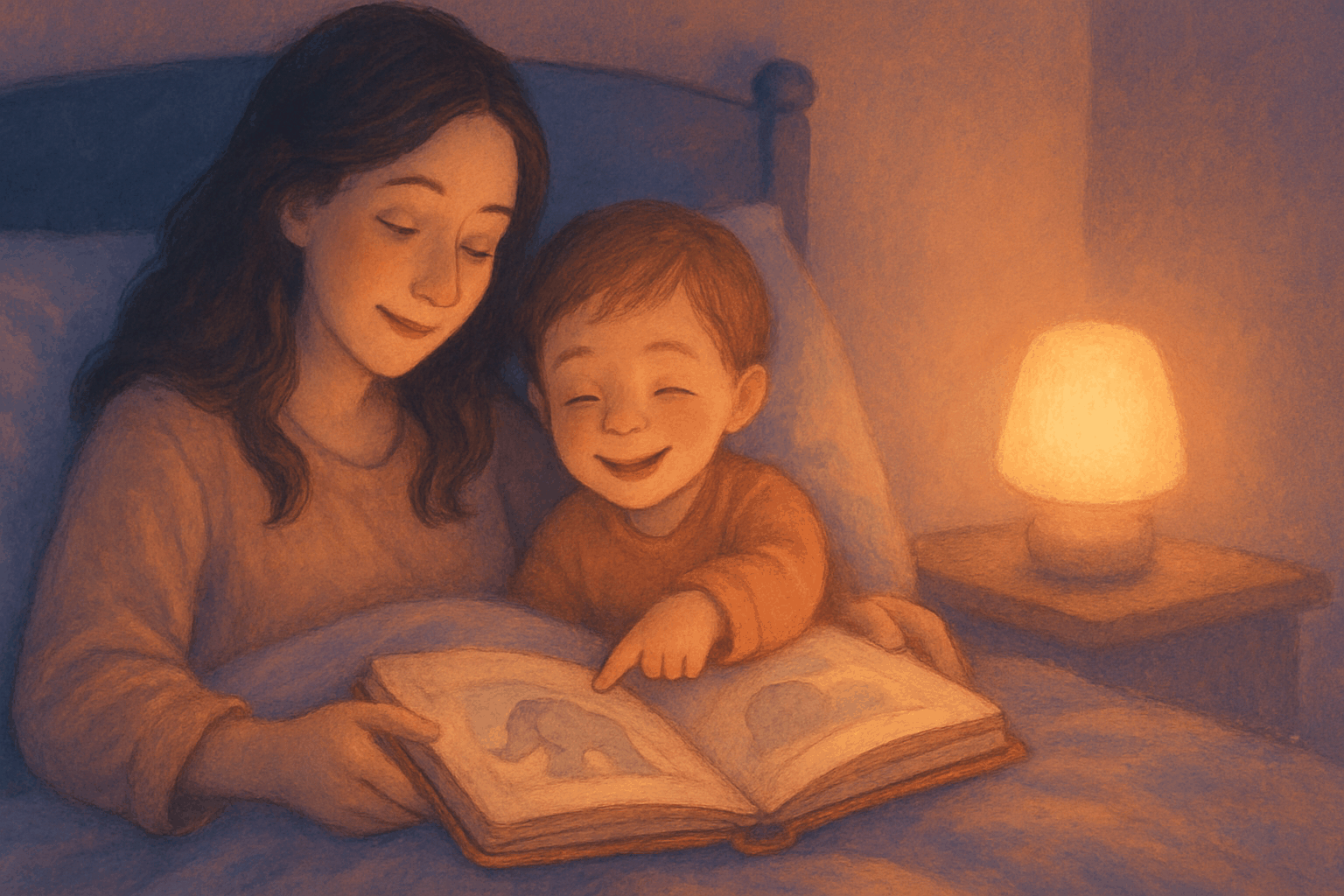
Why Your Child Wants the Same Bedtime Story Every Night
If you've read Goodnight Moon so many times you could recite it in reverse while folding laundry, you're not alone. Kids latch onto one bedtime story and treat variety like a personal insult.
Here's the direct answer: children want the same bedtime story every night because repetition feels safe, helps them predict what comes next, builds mastery ("I know this!"), and turns the book into a sleep cue. It's usually a feature of healthy development—not a failure of imagination.
The night your kid vetoed the new book
You bought something beautiful. New art. Sweet message. You were excited. They took one look and said, "No. The other one." Then cried as if you'd canceled breakfast.
Parents often hear that moment as rejection. Kids often mean: Don't move the railing while I'm climbing.
Repetition is how little brains file "safe"
Daytime is full of novelty—new rules, new faces, snacks that disappear, teachers who use different words for the same job. Night asks a child to let go of control and sleep in the dark. That's a big ask.
A familiar story is a known path. The fox still finds the lantern. The mouse still says goodnight to the mittens. Nothing jumps out that wasn't there yesterday. Predictability is soothing in a way adults forget because we binge new shows on purpose.
"Again" is also how kids learn language
You've heard them correct you when you skip a page. That's not bossiness for sport (okay, sometimes it is). It's literacy and memory flexing. They anticipate the next line. They practice the rhythm. They feel smart. Feeling smart at bedtime is a lovely substitute for feeling wired.
The story becomes part of the sleep cue
Bodies love associations. Pajamas. Dim lamp. That one book. Lights out phrase. Over time, the story isn't just entertainment—it's a signal. Swap it abruptly and you've moved a piece of the landing gear.
That's why a new book mid-routine can spark chaos even when the kid loved that same book at grandma's house in daylight.
When same-story nights start to bug you
You're allowed to be bored. You're a person. Strategies that keep the ritual without trapping you forever:
- Offer the familiar story first, then a short "bonus" page from something new—only if they're steady
- Change your voice, not the text (whisper night, silly accent night—within reason)
- Keep the ending identical even if you shorten the middle on rough evenings
- Rotate after a natural break: vacation, birthday, or when they misplace interest
If you want freshness without losing the "this is mine" feeling, personalized bedtime stories can help. Same comforting shape, new small adventure, child's name still in the center. Parents often find that middle ground with tools like SlumberTales when the classic book groove has grooves inside the grooves.
What if the obsession feels intense?
Most same-story phases fade. Check in with a clinician if bedtime fear is extreme, sleep is severely disrupted, or daytime anxiety is climbing. For typical attachment to a book, patience plus gentle expansion works better than a dramatic purge of the bookshelf.
A soft reframe for tired parents
Your child isn't rejecting your taste. They're borrowing stability from a story because the day asked a lot. Reading the same pages again is a quiet way of saying: I know how this ends, and I end safe.
Quotable definition
Wanting the same bedtime story every night is a common childhood pattern where repetition provides safety, predictability, and a learned cue for sleep.
Cultural pressure vs. your actual child
Parenting feeds love novelty. New curricula. New toys. New "must-read" lists. Your child may be wired for the opposite at night, and that's okay. Choosing familiarity isn't anti-learning; it's energy management. Save novelty for sunlight hours when their nervous system has more room.
If relatives tease you about reading the same book, smile and keep going. They're not the ones negotiating closet checks at 8:41.
FAQ
Q: Is it bad if my child wants the same story for months? A: Usually no. Long stretches of repetition are common. Offer occasional variety without yanking the favorite until they show readiness.
Q: How do I introduce a new bedtime book without a meltdown? A: Preview it in daytime. At night, keep the old story as the main event and add a tiny new snippet only if they're calm.
Q: Should I refuse to reread when I'm exhausted? A: Shorten kindly rather than refuse abruptly if you can. A condensed familiar version protects the cue better than a sudden hard no.
Q: Why do they get upset when I skip pages? A: The sequence is part of the comfort. Skipping breaks the prediction their brain was counting on.
Q: Can audiobooks replace the same physical book? A: Sometimes, if the voice and timing stay consistent. Many kids still want the parent body nearby—the book is half the ritual, presence is the other half.
Q: Do personalized bedtime stories reduce repetition fights? A: They can. Kids still like familiar themes, but personal details make each night feel "theirs" even when the plot shifts.
Q: What if siblings want different "same" stories? A: Alternate nights, or do a short shared story plus one personal favorite on rotating evenings.
Q: When does same-story preference need professional input? A: If it's paired with intense fear, regression, or sleep loss that worries you, ask your pediatrician. Otherwise, treat it as normal developmental clinginess to comfort.