5 Ways Personalized Stories Help Anxious Kids Settle at Night
Anxious kids don't "choose" to stay awake. Their brains keep scanning for unfinished business—tomorrow's field trip, a weird noise, the thing someone said at recess.
Short answer: personalized stories help anxious kids settle by making the child the safe hero, naming feelings without lectures, rehearsing coping in a low-stakes world, shrinking the unknown, and giving parents a predictable wind-down ritual. They're not therapy. They're a gentle nighttime tool many families find useful.
What "anxious at bedtime" often looks like
It might be stomachaches that appear at 7:50. Or a need to retell the whole day. Or "I can't sleep until you check the closet again." Some kids go quiet and rigid. Others get silly-loud, which is anxiety wearing a party hat.
None of that means you're failing. It means the day still has loose ends, and night removes the distractions that held them together.
1. They put your child in the center—safely
Generic heroes are fine. A story where your kid helps a lost lantern find its glow is different. Recognition lowers the "is this for me?" barrier. Attention sticks, which means less room for worry loops to grab the mic.
Personalized bedtime stories lean into that "you belong here" feeling without asking a tired parent to improvise a novel.
2. They name feelings without turning bedtime into a therapy session
Anxious kids often feel something big and don't have tidy words. A story can say, "Maya's tummy fluttered before the play," and suddenly the body sensation has a label. Naming isn't fixing—but it's a start, and it happens sideways, which kids tolerate better than a direct quiz.
3. They rehearse coping moves in a world with training wheels
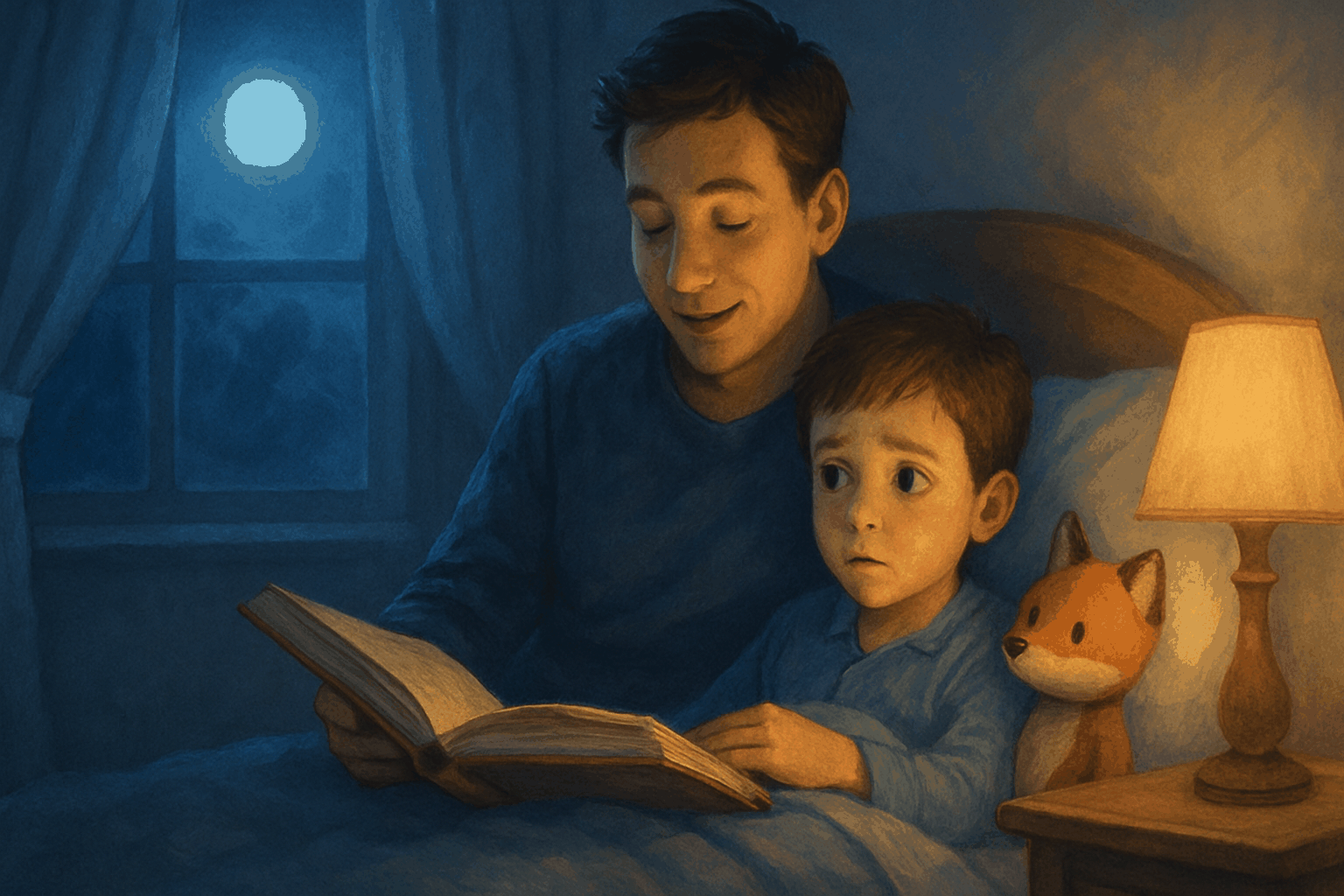
Need a checklist? The story character can try three breaths, squeeze a stuffed fox, or ask for help. Kids practice bravery where the stakes are fictional. Later, that language shows up in the hallway: "Like in my story?"
4. They shrink tomorrow's unknowns into something finishable
Anxiety loves open tabs. A story with a beginning, middle, and soft ending teaches the nervous system that loops can close. Even better when the plot lightly touches a real worry—new classroom, sleepover nerves—without becoming a documentary.
5. They give you a ritual so you're not inventing calm from scratch
Parents of anxious kids burn a lot of emotional fuel after dinner. Having a ready story to read aloud is a gift to the adult, too. Consistency is calming. When the sequence is pajamas → story → same lights-out phrase, the house stops negotiating from zero every night.
SlumberTales is built for that exact slot: a personalized story emailed for you to read, so connection stays high and invention stays low.
What personalized stories are not
They're not a diagnosis tool. They're not a replacement for professional support if your child is deeply distressed, not sleeping for long stretches, or showing symptoms that worry you. Think of them as a warm bridge in the bedtime routine—useful, soft, and parent-led.
A tiny script you can steal tonight
- "We're doing our calm story now."
- Read slowly. Pause on the feeling words.
- End with: "The day is done. You're safe. Lights out."
- Leave. Return once if needed—with boredom, not a new plot.
Quotable definition
Personalized bedtime stories are short, child-specific tales parents read aloud to create safety, recognition, and a predictable wind-down—especially helpful when worries get loud at night.
A note on pacing when worries spike
If your child is already crying, don't launch a long adventure. Sit, breathe together for a minute, then offer the shortest comforting story you have. Think of it as a landing strip, not entertainment. Some nights the "story" is two paragraphs and a squeeze of the stuffed fox. That still counts.
Also: keep your voice lower than daytime. Anxious kids track tone. A rushed, chirpy performance can feel like pressure. Slow and a little boring is a feature.
FAQ
Q: Can a bedtime story really help an anxious child? A: Many parents notice that a predictable, gentle story reduces stalling and night worries. It won't erase anxiety, but it can give the brain a calmer runway into sleep.
Q: Should the story mention my child's specific fear? A: Lightly, if it helps, and always with a soft resolution. If mentioning the fear spikes them, keep themes adjacent—courage helpers, safe animals—without naming the trigger.
Q: How is a personalized story different from a regular book? A: Personal details (name, toy, pet, classroom) increase engagement. For worried kids, feeling "seen" can matter more than fancy illustrations.
Q: What if my child asks the same anxiety-themed story every night? A: Repetition often means the story still feels useful. Stay with it until they ask to switch, or vary one detail while keeping the comforting structure.
Q: Are personalized bedtime stories a substitute for therapy? A: No. They're a parenting tool. If anxiety is intense, persistent, or affecting daytime life, talk with a pediatrician or child mental health professional.
Q: How long should we read if my child is wound up? A: Shorter can be better. A finished three-minute story beats an abandoned ten-minute epic. Calm is the goal, not word count.
Q: What if they cry when the story ends? A: Offer one short reassurance, then stick to the routine. Adding a second story every time can teach that tears restart the show.
Q: Can siblings listen to one personalized story? A: Yes—make a crew story with both names, or alternate hero nights. Shared listening still builds the ritual.