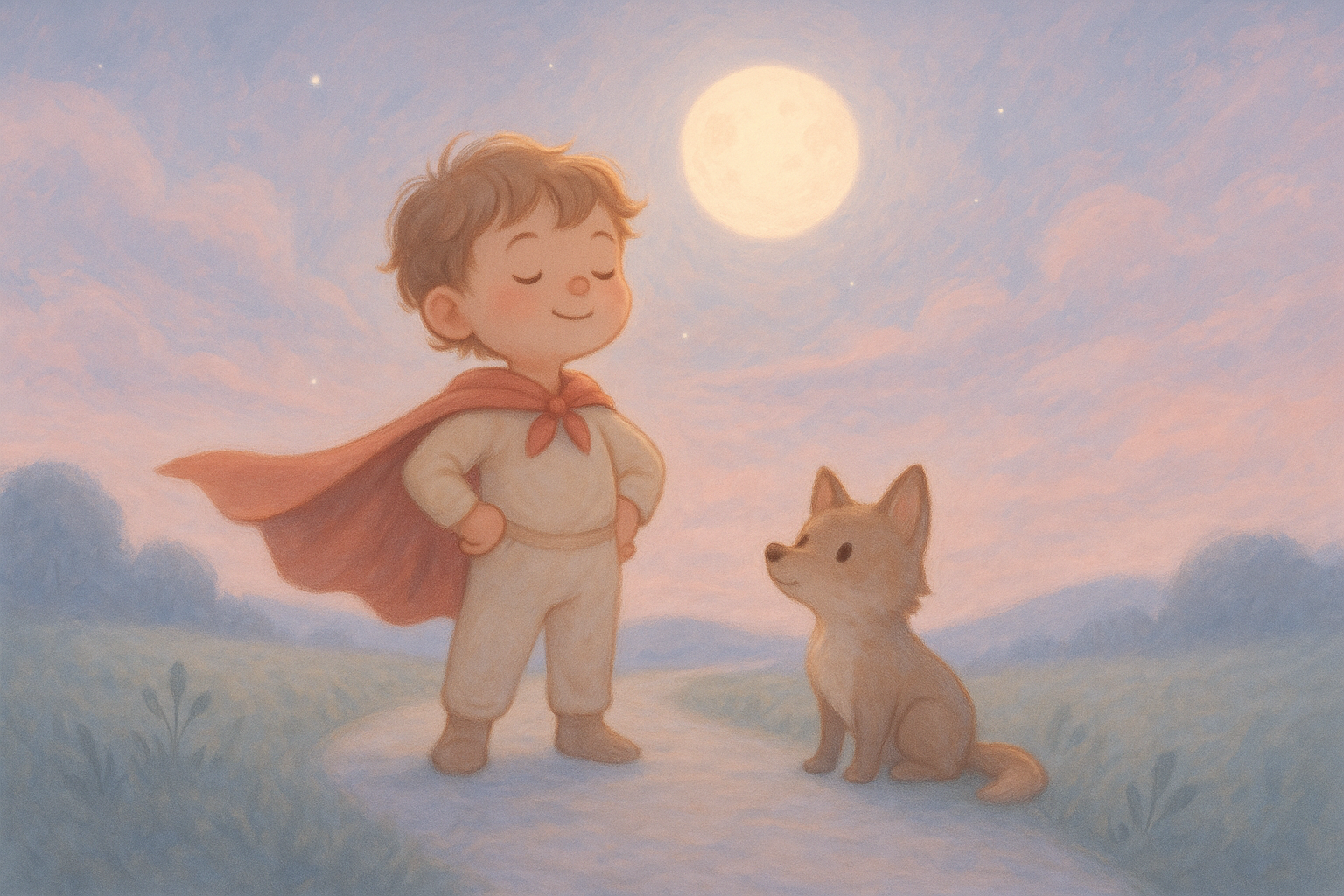
The Case for Letting Kids Star in Their Own Bedtime Adventure
Some kids only lean in when they hear their own name. That's not vanity—it's how attention and belonging work. The case for letting kids star in their own bedtime adventure is simple: when the hero wears their sneakers, their pet, and their courage, the story stops being "content" and starts being recognition.
Short answer: letting kids star in their own bedtime adventure boosts engagement, helps them rehearse bravery safely, and makes wind-down feel personal. You don't need a novel. You need a short arc where your child helps, chooses kindness, and ends safe in bed.
What "starring" actually means
It doesn't mean your child defeats dragons for forty minutes. It means the story's main character shares:
- Their name (or nickname)
- A familiar detail (street, classroom, stuffed fox)
- A feeling they've had this week
- A small win that fits bedtime
Recognition is the fuel. Spectacle is optional.
Why it helps at lights-out
Attention sticks
Generic heroes compete with leftover cartoons in their head. "Jordan and Pip find the missing moon sock" competes less—because it's them.
Feelings get a safe costume
A kid who won't say "I'm nervous about the play" may listen hard when story-Jordan's tummy flutters before the lantern parade. Distance plus familiarity is a sweet spot.
Confidence gets a rehearsal space
Bedtime adventures let kids practice trying, asking for help, and finishing—then sleeping. That's a better close than a cliffhanger battle.
You get a connection ritual without a TED Talk
You're not lecturing. You're saying, with plot: I see you. You belong in the center of care tonight.
The worry parents have (and a softer take)
"Won't this make them self-centered?" Usually the opposite. Kids who feel seen often have more room to care about others in the story—helping a friend, sharing the map, inviting a sibling sidekick.
Starring isn't the same as spoiling. Limits still exist: one story, soft ending, lights out.
A five-beat adventure you can invent half-asleep
- Hero + helper (child + toy/pet/sidekick)
- Tiny problem (lost mitten, dim lantern, lonely snail)
- One try (they attempt a kind or brave step)
- Help accepted (helper or parent-in-story assists)
- Home (bed, quilt, familiar goodnight line)
That's a complete adventure. Under five minutes if you keep sentences short.
Personalization without turning into homework
You don't need lore bibles. Keep a sticky note of:
- Favorite animal
- Best friend's name
- Current worry (optional, light touch)
- Comfort object
Rotate details. Reuse the structure. Kids love sameness with one fresh sparkle.
Personalized bedtime story tools exist for nights when your brain is empty. SlumberTales can draft the adventure around your child's details so you still do the sacred part: reading it in your voice.
When starring is especially useful
- After a hard social day
- Before a first (new school, sleepover nerves)
- During same-book fatigue
- When siblings need a crew version with two stars
When to keep it light
If naming a fear spikes them, keep the adventure adjacent—courage helpers and safe quests—without starring the scary thing itself. The child can still be the hero of a gentler plot.
Guardrails that keep adventures bedtime-safe
- No abandoned heroes
- No permanent lost toys
- Magic with kind rules
- End before anyone is more awake than when you started
Soft definition
Letting kids star in their own bedtime adventure means placing your child as the cared-for hero of a short, finishable nighttime story—so recognition and calm arrive together.
A sample starring opener you can reuse
"Tonight, Sam and Pip the fox checked the garden for the missing wind chime. Sam's sneakers still had sidewalk chalk dust on them. Pip's whiskers glowed just enough to show the path. They didn't need to be the fastest—only kind and curious—and home before the quilt got lonely."
Swap names. Swap the missing object. Keep the homeward promise. You've got a starring adventure without a writing degree.
If your child wants darker stakes, shrink them: the "storm" is a rain stick sound; the "lost" thing is found by page three. Starring should leave them proud and sleepy, not amped and scanning the closet.
FAQ
Q: What age should kids start starring in stories? A: Many toddlers light up at their name. Preschool and early elementary often love fuller hero roles. Adjust complexity to attention span.
Q: Should every night be a personalized adventure? A: No. Rotate with picture books. Personal starring is a tool, not a monopoly.
Q: What if my child demands endless sequels? A: Promise "tomorrow's chapter" and keep tonight's ending intact. Finite stories protect sleep.
Q: Can shy kids dislike being the hero? A: Sometimes. Offer a helper-hero role ("you and Pip share the lead") or a story about their toy as the star with the child as wise friend.
Q: How do I include siblings fairly? A: Crew adventures, alternating lead nights, or dual quests that reunite at the end.
Q: Is this different from imaginative daytime play? A: Daytime play can be wild. Bedtime starring should stay soft, short, and homeward-bound.
Q: Do I need perfect writing? A: No. Warm voice beats polished prose. Kids forgive clunky sentences; they notice care.
Q: Can personalized story apps replace me reading? A: The parent voice is often the active ingredient. Use tools that support you reading aloud rather than replacing presence.