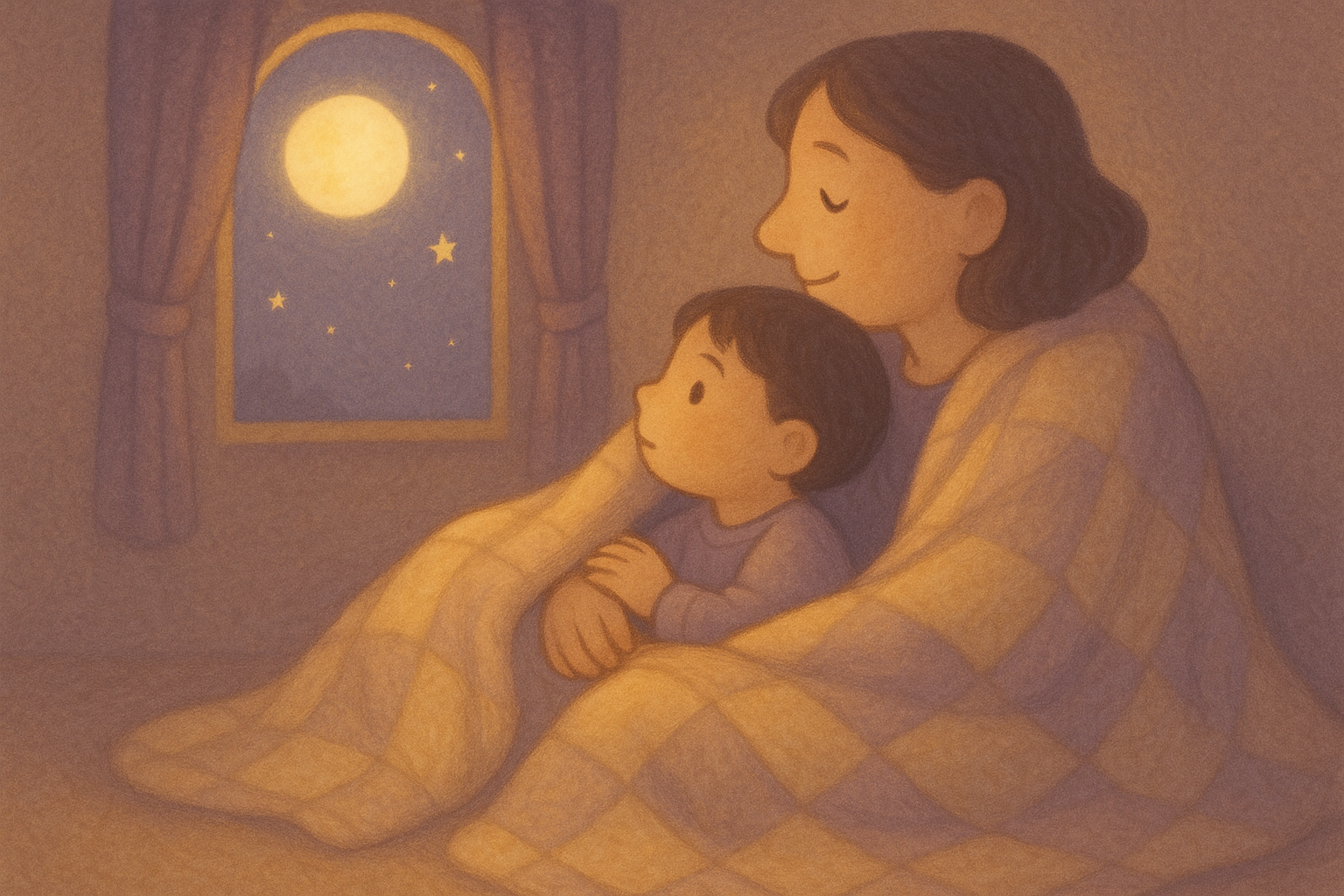
How Faith-Friendly Bedtime Stories Can Stay Gentle (Not Preachy)
You can want bedtime to reflect your family's faith without turning lights-out into a miniature sermon. Faith-friendly bedtime stories can stay gentle—not preachy—when they lead with warmth, belonging, and small kindnesses instead of a quiz at the end.
Short answer: keep faith-friendly stories gentle by focusing on comfort, gratitude, courage, and care for others; use soft language; avoid scare-based morals; and let the story end in safety. Values can live inside the plot without a lecture coda.
What "preachy" feels like to a tired kid
Preachy usually means:
- A character exists mainly to deliver a lesson
- The ending stops for a moral speech
- Fear or shame does the heavy lifting ("be good or else")
- The parent suddenly becomes a narrator-pastor mid-page
Kids feel the shift. So do you. After a long day, nobody needs a second homily in footie pajamas.
What gentle faith-friendly can look like instead
- A child helps a neighbor find a lost kitten and comes home thankful
- A family shares bread and says a simple goodnight gratitude
- A scared hero remembers they're loved—then sleeps
- Wonder about stars, kindness, and "we're not alone" without jargon
The faith note can be as light as a single line of thanks, a sense of being held, or a value your family names out loud: mercy, courage, honesty, care for the small.
Lead with story, not syllabus
Ask: Would this still be a good bedtime tale if we removed the label? If the answer is yes—warm arc, soft ending, loyal helpers—you're in a safer zone. Faith can flavor the soup without becoming the only ingredient.
Language that keeps the room soft
Prefer:
- "They felt thankful."
- "They chose kindness even when it was hard."
- "They remembered they were loved."
Use carefully:
- Long doctrinal explanations at 8:40
- Punishment-centered plots
- Villains who exist only to be condemned in detail
You're forming a sleep association. Tenderness trains better than terror.
For interfaith, questioning, or mixed households
Gentle still works. Agree on shared values—honesty, compassion, courage—and let stories carry those. You don't need identical theology to protect a calm bedtime. If relatives gift books that feel heavier than your house style, it's okay to read them at daytime or paraphrase kindly at night.
Personalization without pressure
Kids light up when they star in a story that also reflects family warmth: helping Grandma, sharing with a sibling, noticing beauty outdoors. Personalized bedtime stories can include those values without a worksheet tone.
A simple gentle template
- Child + loyal sidekick
- Small problem that needs care
- One kind choice
- Soft gratitude or belonging line
- Home and sleep
That's enough. Save deeper conversations for daylight when everyone has more bandwidth.
A sample gentle scene (steal freely)
"Leah and her stuffed lamb walked the garden path to return Mrs. Diaz's wooden spoon. The moon made silver circles on the grass. Leah felt thankful for hands that help and homes that wait. They whispered goodnight to the beans and the sky, then climbed into bed where love felt as ordinary—and as wonderful—as a quilt."
No speech. No quiz. Values lived in action. You can add a one-line family thanks afterward if that is your custom—or not. Either way, the story stayed soft.
If crafting scenes drains you, keep a prompt jar: "help a neighbor," "share," "brave apology," "notice beauty." Draw one. Tell a three-minute tale. Or let SlumberTales weave the prompt into a personalized story you read in your own calm voice.
If a story starts feeling heavy mid-read, you are allowed to soft-land early: skip to the kind ending, close the book, and use your family's goodnight line. Protecting sleep is not a failure of faith teaching. Daytime is still available for deeper talk.
FAQ
Q: Can faith-friendly stories include prayer? A: If it fits your family, keep it short and comforting. A brief goodnight thanks often lands better than a long recited block when kids are fading.
Q: What if my child asks big theology questions at bedtime? A: Offer a one-sentence honest answer, then park the rest for tomorrow. Big topics deserve daylight.
Q: Are classic religious children's books okay at night? A: Many are. Preview endings. If a book spikes fear, move it earlier in the day.
Q: How do I avoid sounding preachy when I'm tired? A: Stick to the plot. Let kindness show. Skip the summary speech.
Q: Can siblings with different interest levels share one story? A: Yes—choose belonging and kindness themes. Keep doctrine debates for other hours.
Q: Is it wrong to adapt a book's moral to be softer? A: You're allowed to protect bedtime. Paraphrase. Shorten. Choose another title.
Q: Do personalized stories work for faith-friendly homes? A: Yes when prompts emphasize warmth and values you already practice—not a checklist of lessons.
Q: What if grandparents want heavier messages? A: Honor relationships in daytime visits when you can; keep night rituals aligned with what helps your child sleep.