7 Bedtime Routine Mistakes That Keep Kids Wired (And What to Do Instead)
Kids don't stay wired at lights-out because they're "bad sleepers." Most nights, something in the routine quietly revs them up right when you need the opposite.
Here's the short answer: the biggest bedtime routine mistakes are late caffeine or sugar, screens too close to sleep, rushing the wind-down, inconsistent timing, overstimulating play, long negotiations, and skipping a calming cue like a story. Fix those, and most kids settle faster.
Why bedtime can feel like a second job
You've done dinner. Bath happened (sort of). Teeth got brushed. Then your four-year-old suddenly invents a new rule about which sock goes on first, and your seven-year-old remembers a math worksheet that "has to" be done right now.
That's not sabotage. It's a tired brain looking for one more lap around the day. A solid bedtime routine isn't about perfection. It's about fewer surprises for a nervous system that's already running on fumes.
Mistake 1: Treating "almost bedtime" like daytime
When the hour before bed still looks like wrestling, TikTok highlights, or a sibling debate about who got the bigger cookie, kids' bodies stay in go-mode.
What to do instead: Pick a soft landing zone—dim lights, quieter voices, slower activities. Even ten minutes of "evening mode" helps. Many parents notice kids melt faster when the house visually shifts: lamps on, overheads off.
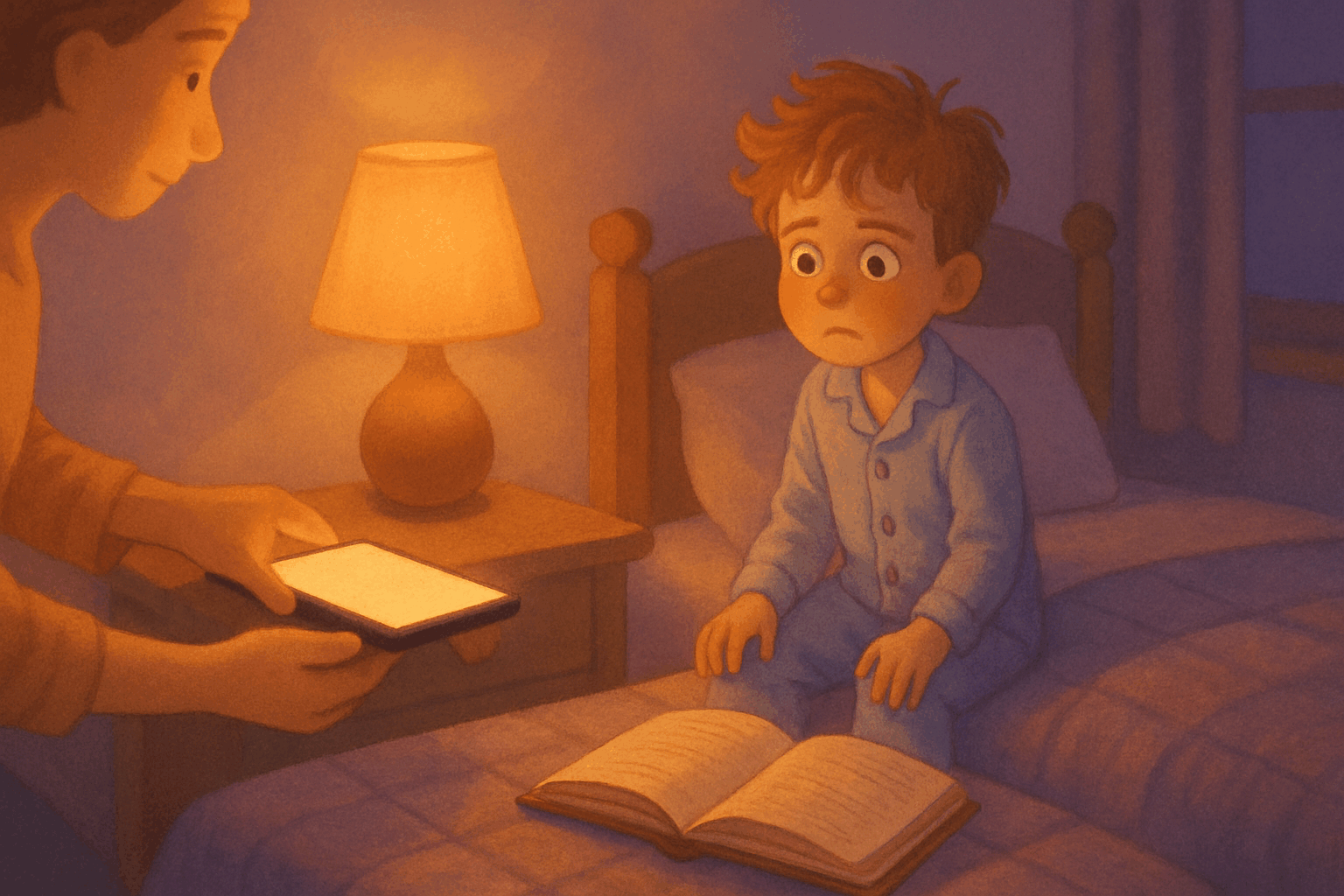
Mistake 2: Screens right up against lights-out
Tablets and phones aren't evil. They're just bright, fast, and good at keeping brains alert. Pediatric sleep guidance often suggests a buffer before sleep, and parents who try it usually report fewer "one more episode" battles.
What to do instead: Park devices earlier, or switch to audio-only if you need a bridge. A short story—especially one that stars your child—gives the same "I'm with you" feeling without the glow.
Mistake 3: Rushing the wind-down like a checklist
Brush. Pajamas. Lights. Done. When the routine is all efficiency and no connection, kids often stall. They've learned the only guaranteed parent time left in the day is whatever they can stretch at the bedroom door.
What to do instead: Build in one predictable connection moment. Five minutes of cuddles. Two pages. A personalized bedtime story you read aloud. Connection first, then sleep—not the reverse.
Mistake 4: A different bedtime every night
Weekend drift is real. Friday at 9:40, Sunday panic at 7:15. Kids' internal clocks don't love whiplash.
What to do instead: Keep the target time within about 30 minutes across the week when you can. If weekends run late, protect a calmer Sunday night rather than hoping Monday will magically reset itself.
Mistake 5: High-energy play after dinner
Pillow fights, hide-and-seek, "just one more race down the hall"—fun, then suddenly nobody can settle. Movement is great earlier. Late roughhousing often backfires.
What to do instead: Move big play earlier. After dinner, lean into puzzles, drawing, quiet LEGO, or reading. Save the wrestling for afternoon.
Mistake 6: Negotiating every request like it's a contract
Water. Another hug. A different stuffed animal. The "I need to tell you something important" that turns out to be about a squirrel. If every ask becomes a debate, bedtime becomes a courtroom.
What to do instead: Use kind, boring consistency. "One water, one hug, then lights." Write the sequence on a card if it helps. Kids push less when the answers stop changing.
Mistake 7: Skipping the story (or making it a battleground)
Stories aren't fluff. They're a bridge from day-brain to night-brain. When story time becomes "finish this chapter or else," the calm evaporates.
What to do instead: Keep stories short enough to finish, warm enough to land. Personalized bedtime stories work especially well because kids hear their own name, pets, and favorite toys—attention sticks without you having to "perform."
If you want a low-friction version, tools like SlumberTales email a story you can read aloud so you're not inventing plot twists at 8:12 p.m.
A simple replacement routine that actually sticks
Try this shape for a week:
- Dim lights ~30 minutes before bed
- Pajamas + teeth (same order every night)
- One connection block (story, song, or quiet chat)
- Lights out with the same short phrase
Don't overhaul everything Monday night. Fix one mistake. Then another. Bedtime improves in inches, not magic leaps.
Soft definition you can keep
A bedtime routine is a short, repeatable sequence that tells a child's body: the day is closing, and sleep is safe to begin.
FAQ
Q: How long should a bedtime routine be? A: Most families land between 20 and 45 minutes. Shorter is fine if it's consistent; longer often means more stalling unless the extra time is truly calming.
Q: What if my child melts down when screens turn off? A: Expect a few rough nights while the habit resets. Offer a replacement they actually like—story time, a favorite playlist, or drawing—so "no tablet" doesn't feel like "nothing."
Q: Is a bath required for a good bedtime routine? A: No. Baths help some kids and overstimulate others. If baths wind your child up, move them earlier or skip them on weeknights.
Q: Should siblings share the same bedtime? A: Close ages often can. Big age gaps may need staggered lights-out so older kids get wind-down that fits them. Shared story time still works well.
Q: What if we travel or have guests and the routine breaks? A: Keep two anchors: the same pajamas-and-teeth order, and the same short story or phrase at lights-out. Familiar pieces travel better than a perfect schedule.
Q: Are personalized bedtime stories better than classic books? A: They're different tools. Classics build shared language; personalized stories often hold attention because the child is the hero. Many parents rotate both.
Q: My kid says they're not tired. Should I keep them up? A: Tired kids often deny it. Stick to the routine time, keep the room calm, and avoid turning "prove you're sleepy" into a debate.
Q: When should I talk to a pediatrician about sleep? A: If snoring, gasping, extreme daytime sleepiness, or sudden sleep changes show up, check in with your child's clinician. This guide is parenting support, not medical advice.