6 Bedtime Books Parents Still Love Reading Aloud After a Long Day
After a long day, you don't need a 40-page odyssey with twelve named woodland councillors. You need bedtime books parents still love reading aloud—stories that finish before your voice gives out.
Short answer: the best read-aloud bedtime books for exhausted parents are short, rhythmic, warm, and emotionally gentle. They invite connection without demanding a theatrical performance. Think finishable pages, soft endings, and language that still sounds good the twentieth time.
What makes a bedtime book "parent-proof"
Parents keep books when three things are true:
- You can finish them before the stalling starts
- The art and voice still feel pleasant after a rough shift
- Kids settle rather than re-energize
That last one matters. Some picture books are daytime gold and nighttime chaos—too silly, too loud, too cliffhanger. Bedtime wants a soft landing.
1. The short classic with a lullaby rhythm
You know the ones: patterned goodnights, repeating lines, pages that almost sing themselves. Kids lean on the predictability. You lean on the fact that your mouth already knows the next sentence.
Why parents still love them: zero prep, high comfort, built-in sleep cue.
2. The "one cozy place" book
Stories that stay in a bedroom, a small house, or a single gentle journey home. Limited locations mean fewer plot gymnastics for a tired reader.
Try choosing books where the climax is finding a blanket, not defeating a villain.
3. The quiet humor book
Humor helps—especially the soft kind. A sock that won't cooperate. A bear who is very serious about toast. Save the slapstick scream-laugh books for afternoon.
Parents love these because they get a tiny smile without waking the whole nervous system.
4. The feelings book that doesn't turn into a lecture
Some kids need language for "my tummy feels fizzy." The right book names a feeling, offers a kindness, and ends. No workbook energy. No "and what did we learn?" quiz at 8:20.
5. The nature-at-night book
Moon, rain, fireflies, a patient tree. Nature pacing is slower than cartoon pacing. Many parents notice kids' shoulders drop during weather pages.
Keep it wonder-forward, not spooky-forest-forward, if nights already feel big.
6. The personalized-or-familiar-hero story
This one's less about a bookstore spine and more about fit. When your child hears their name, their pet, or their stuffed fox as a helper, attention sticks. Personalized bedtime stories fill this slot when classic books feel stale or siblings fight over the same title.
You still read aloud. You just invent less plot from scratch—which is the whole point after a long day.
How to choose tonight without a 20-minute bookshelf debate
- Offer two options, not the whole shelf
- Keep a "weeknight stack" of five finishable books
- Rotate one new title on weekends when you have more patience
- If a book regularly causes stalling ("just one more chapter"), move it to daytime
Reading tips for the drained version of you
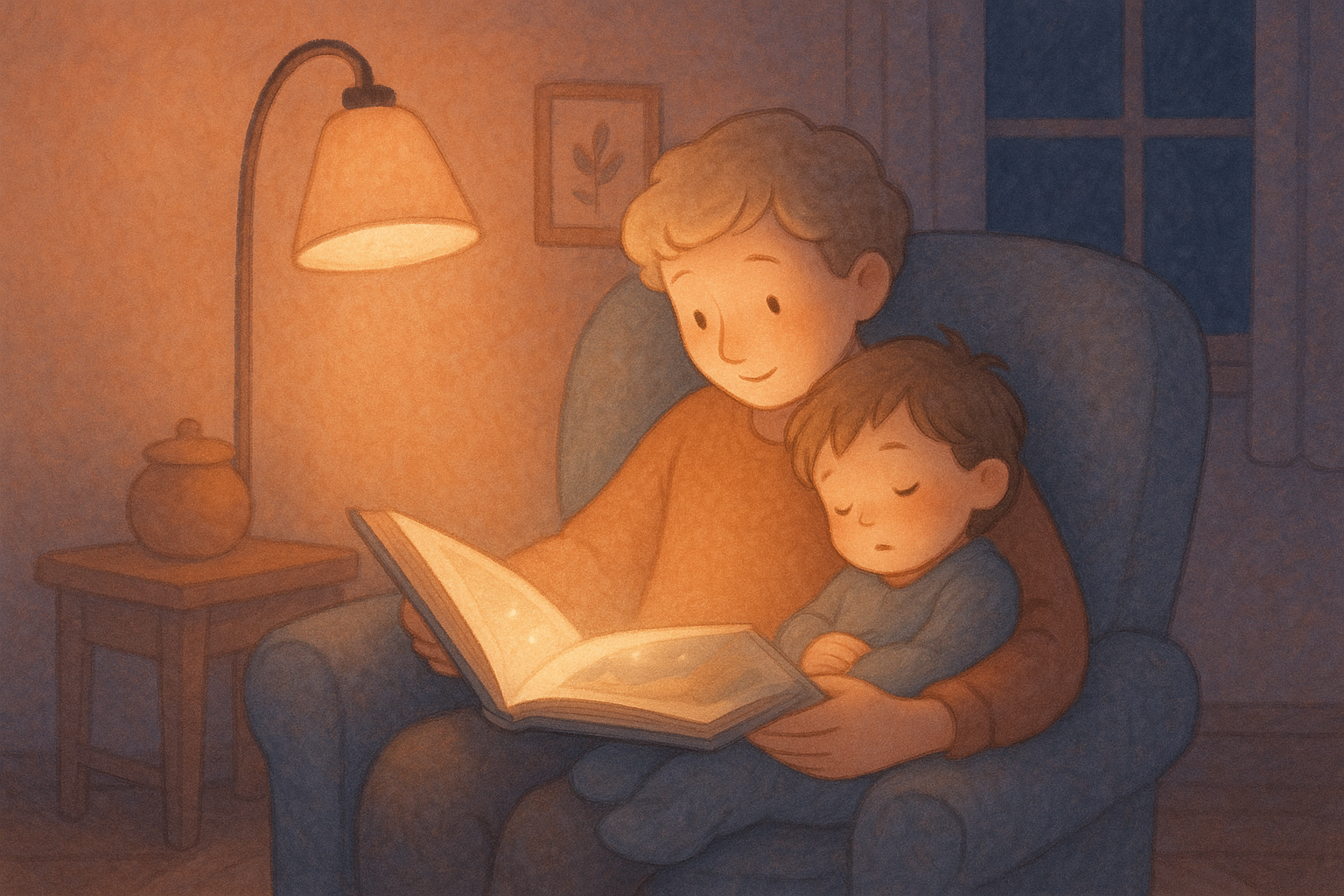
Sit. Dim the lamp. Read a little slower than feels natural. Skip the character voices if you don't have them in you—kids care more about presence than accents. If you need to shorten, keep the ending intact. Endings are the landing gear.
And if you forget which book you already read three times this week: that's not failure. That's a kid using repetition as safety.
A simple weeknight story slot
- Pajamas and teeth
- One short book (or one personalized story)
- Same lights-out phrase
- Leave before you start a second negotiation
Protect the slot even when dinner ran late. A three-minute story still beats handing over a phone in defeat—most nights, anyway.
Build a "tired parent" shelf
Keep five finishable books in a basket by the bed—not the whole library. When kids choose from the basket, debates shrink. Restock on Sundays if you have energy; ignore restocking if you don't.
Include at least one nearly memorized title. Muscle memory reading is a gift on hard nights. Include one quieter funny book. Include one personalized printout or device story for "me" nights.
If relatives send elaborate hardcovers, enjoy them on weekends. Weeknights need mercy more than prestige.
Parents often feel guilty for wanting shorter books. That guilt helps nobody sleep. A finished short story with a hug beats an abandoned epic every time. When classic shelves feel stale, a personalized SlumberTales story can refresh the slot without a bookstore run.
FAQ
Q: How long should a bedtime read-aloud be? A: Often 3–8 minutes. Finishable beats impressive.
Q: What if my child only wants long chapter books? A: Try one short chapter as the night portion, with a clear "we stop at the end of this chapter" rule. Or save chapters for weekends.
Q: Are board books still okay for older toddlers? A: Yes if they settle your child. Dignity matters less than a calm landing.
Q: Should I read the same book every night? A: If it helps, yes. Variety can wait until the routine feels steady.
Q: Can audiobooks replace parent read-alouds? A: Sometimes as a bridge. Many kids still want your body in the room. Audio plus presence works better than audio alone for some families.
Q: What if I hate the book my kid loves? A: Shorten kindly, alternate with a book you tolerate, or use a personalized story with themes you both like.
Q: Do personalized bedtime stories count as "books"? A: For routine purposes, yes—they're a story you read aloud. Pair them with picture books when you want art and shared culture.
Q: How do I handle siblings wanting different books? A: Alternate nights, or read one short shared story and keep personal favorites for rotating turns.